
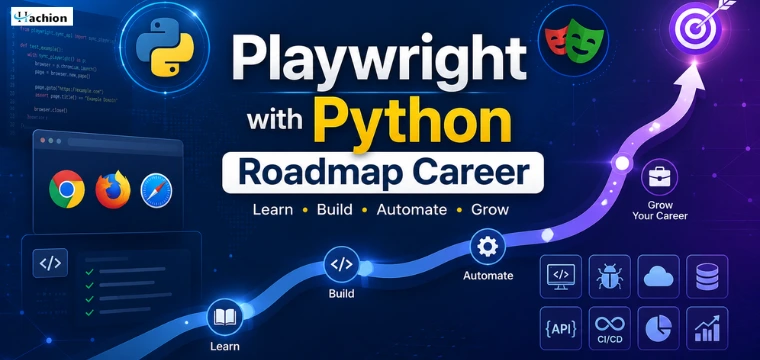
Playwright with Python Roadmap Career Guide for Beginners
The demand for automation testing professionals is growing rapidly as companies focus on delivering high-quality software faster and more efficiently. Modern applications require advanced testing frameworks that can handle web applications, multiple browsers, and complex testing scenarios. This is where Playwright with Python Roadmap Career becomes an important learning path for aspiring automation testers and professionals looking to upgrade their skills.
A well-structured Playwright with Python Roadmap Career helps beginners and experienced testers understand the right skills, tools, projects, and career opportunities required to become successful automation engineers. By combining Python’s easy-to-learn programming approach with Playwright’s advanced browser automation features, professionals can create efficient, scalable, and dependable automation testing solutions.
Traditional testing tools are being replaced by modern automation frameworks that offer faster execution, better browser support, and improved testing capabilities. Learning Playwright with Python can help professionals stay competitive in the software testing industry and explore high-demand career opportunities.
What is Playwright with Python?
Playwright is an open-source automation testing framework developed by Microsoft that allows testers to automate web applications across multiple browsers, including Chromium, Firefox, and WebKit.
When combined with Python, Playwright provides a simple and powerful environment for creating automated test scripts. Python’s easy-to-understand syntax makes it an excellent programming language choice for beginners entering automation testing.
Unlike traditional automation tools, Playwright supports modern web applications with features such as:
- Cross-browser testing
- Automated API testing
- Mobile browser testing
- Parallel test execution
- Screenshot and video recording
- Network interception
- End-to-end testing
Companies use Playwright to improve testing efficiency, reduce manual testing efforts, and deliver better software quality.
Why Choose Playwright with Python for Your Career?
The software industry is moving toward faster development cycles, continuous integration, and automated quality assurance. This growth has increased the demand for skilled automation testers.
Here are some reasons why learning Playwright with Python can benefit your career:
1. Growing Demand for Automation Testing Skills
Organizations across industries are adopting automation testing to improve productivity and reduce software release time. Professionals with expertise in modern automation frameworks have better career opportunities.
2. Easy Learning Curve with Python
Python is one of the most beginner-friendly programming languages. Testers with basic programming knowledge can quickly learn Python automation concepts and start building test scripts.
3. Better Alternative to Traditional Automation Tools
Many organizations are exploring modern solutions because of limitations in older frameworks. Playwright provides faster execution, better browser compatibility, and advanced automation capabilities.
4. High Career Growth Opportunities
Learning Playwright with Python can open opportunities for roles such as:
- Automation Test Engineer
- QA Automation Engineer
- SDET Engineer
- Python Automation Tester
- Software Test Engineer
Playwright with Python Roadmap Career: Step-by-Step Learning Path
A structured learning approach helps you build strong automation testing skills. Below is a complete roadmap to becoming a Playwright Python automation professional.
Step 1: Learn Python Programming Fundamentals
Before starting Playwright automation, understand Python basics.
Important concepts include:
- Variables and data types
- Conditional statements
- Loops
- Functions
- Exception handling
- Object-oriented programming
- File handling
- Python packages
Strong Python fundamentals help you write clean and maintainable automation scripts.
Step 2: Understand Software Testing Fundamentals
Automation engineers should understand testing concepts before writing scripts.
Learn:
- Software testing life cycle
- Test case creation
- Test planning
- Bug reporting
- Regression testing
- Functional testing
- Agile and Scrum methodologies
Testing knowledge helps you create effective automation strategies.
Step 3: Learn Playwright Framework Basics
After understanding Python and testing concepts, start learning Playwright.
Key topics include:
- Installing Playwright with Python
- Browser automation
- Locators and selectors
- Page navigation
- Handling forms
- Managing alerts
- Working with dropdowns
- Handling multiple pages
- Taking screenshots
- Running automated tests
Step 4: Learn Advanced Playwright Automation Concepts
To become job-ready, focus on advanced concepts.
Important skills include:
Browser Automation
Learn how to automate different browsers and execute tests across multiple environments.
Test Framework Integration
Integrate Playwright with popular Python testing frameworks like:
- Pytest
- Unittest
- Data-Driven Testing
Learn how to execute test cases using different sets of test data.
Parallel Testing
Understand how to run multiple tests simultaneously to reduce execution time.
API Testing
Learn how to validate APIs along with UI testing.
Selenium vs Playwright: Which One Should You Learn?
Selenium has been a popular automation testing framework for many years. However, Playwright is gaining popularity because of its modern features and improved performance.
Selenium
Playwright
- Supports multiple browsers
- Supports Chromium, Firefox, WebKit
- Requires additional setup
- Built-in browser automation
- Slower execution in some cases
- Faster test execution
- Requires handling waits manually
- Automatic waiting features
- Mainly focused on web automation
- Supports modern web applications
Learning both Selenium and Playwright can provide broader career opportunities, but Playwright skills are becoming increasingly valuable for modern automation testing roles.
Projects to Build Your Playwright Python Portfolio
Practical projects help demonstrate your automation skills to recruiters.
Some project ideas include:
E-Commerce Website Automation
Create automated tests for:
- Login functionality
- Product search
- Shopping cart
- Checkout process
- Banking Application Testing
Automate scenarios like:
- User authentication
- Account transactions
- Form validation
- Travel Booking Automation
Test:
- Flight search
- Booking workflow
- Payment pages
- API and UI Automation Framework
Build a complete automation framework combining API and UI testing.
Career Opportunities After Learning Playwright with Python
A Playwright Python automation career can lead to various technology roles.
Automation Test Engineer
Responsible for designing, developing, and maintaining automated test scripts.
QA Automation Engineer
Works on improving software quality through automation testing solutions.
SDET (Software Development Engineer in Test)
Combines software development skills with testing expertise to build advanced automation frameworks.
Python Automation Tester
Uses Python and automation tools to create efficient testing solutions.
Skills Required for a Playwright Python Automation Career
To become successful in this field, focus on these skills:
- Python programming
- Playwright framework
- Selenium basics
- API testing
- SQL knowledge
- Git and GitHub
- CI/CD pipelines
- Jenkins
- Docker basics
- Agile methodology
- Test automation frameworks
How Hachion Helps You Build a Playwright Python Automation Career
Building a successful automation testing career requires practical knowledge, industry-focused projects, and expert guidance.
Hachion’s online training programs help learners develop real-world automation testing skills through:
- Industry-focused curriculum
- Hands-on projects
- Practical assignments
- Expert instructor guidance
- Career-oriented learning approach
Whether you are a beginner starting your testing journey or an experienced professional looking to upgrade your automation skills, Hachion online training can help you gain the confidence and knowledge required for today’s technology jobs.
Enroll in Hachion’s Playwright with Python training and start building your automation testing career with practical skills.
Frequently Asked Questions (FAQs)
1. Is Playwright with Python good for career growth?
A: Yes, Playwright with Python offers excellent career opportunities as companies increasingly adopt automation testing frameworks for faster software delivery.
2. Is Playwright easier than Selenium?
A: Playwright is considered easier in many areas because it provides automatic waiting features, modern browser support, and simpler setup.
3. How long does it take to learn Playwright with Python?
A: The learning time depends on your programming and testing background. With consistent practice, beginners can learn the fundamentals within a few weeks.
4. Should you learn Python before getting started with Playwright?
A: Understanding core Python concepts provides a strong foundation for working with Playwright and developing efficient automation tests.
5. Is Playwright in demand for automation testing jobs?
A: Yes, many organizations are adopting Playwright for modern web application testing, increasing demand for skilled automation professionals.
6. Can manual testers learn Playwright with Python?
A: Yes, manual testers can learn Playwright by first understanding Python basics and automation testing concepts.
7. What projects should I build after learning Playwright?
A: You can build e-commerce automation, banking application testing, travel booking automation, and API testing projects to strengthen your portfolio.
8. What is the future of Playwright automation testing?
A: The future of Playwright automation testing looks promising as companies continue moving toward faster releases, continuous testing, and automation-driven development.
Conclusion
A strong Playwright with Python Roadmap Career can help you develop the skills needed to become a successful automation testing professional. By learning Python fundamentals, Playwright automation, testing frameworks, real-world projects, and industry tools, you can build a strong foundation for long-term career growth.
As organizations continue investing in automation testing, professionals with Playwright and Python expertise will have exciting opportunities across software development and quality assurance roles.
Start your learning journey with Hachion online training and gain the practical skills needed to advance your automation testing career.


