
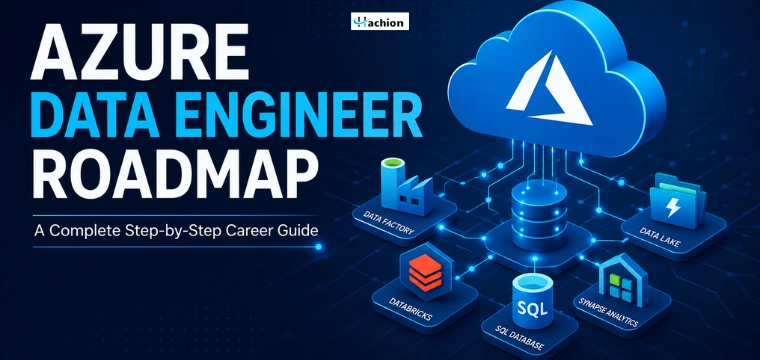
Azure Data Engineer Roadmap: A Complete Step-by-Step Career Guide
Data is the foundation of modern businesses. Every day, organizations collect massive amounts of information from customers, applications, websites, and connected devices. Raw data becomes valuable only when it is organized and converted into actionable insights. This is where data engineers play a critical role.
Following the Azure Data Engineer Roadmap is one of the smartest ways to build a successful career in cloud data engineering. Microsoft Azure offers powerful cloud services that help organizations efficiently collect, store, process, and analyze large volumes of data. As businesses continue adopting cloud technologies, the demand for skilled Azure Data Engineers continues to grow across industries.
Whether you are a beginner exploring cloud technologies, a software developer looking to transition into data engineering, or an IT professional seeking career growth, this guide will walk you through every important step required to become a successful Azure Data Engineer.
Why Choose Azure Data Engineering?
Azure has become one of the world's leading cloud platforms, trusted by startups, enterprises, financial institutions, healthcare providers, retailers, and government organizations.
An Azure Data Engineer designs and builds reliable data pipelines that move information from multiple sources into centralized data platforms. Their work helps data analysts, business intelligence teams, and data scientists access accurate and well-organized data for reporting and advanced analytics.
Some key responsibilities include:
- Designing scalable data pipelines
- Building ETL and ELT workflows
- Managing cloud-based storage solutions
- Processing batch and streaming data
- Improving data quality and security
- Optimizing cloud data performance
- Supporting business intelligence initiatives
Azure Data Engineer Roadmap
Building a successful career requires learning the right technologies in the correct order. Below is a practical roadmap that many successful professionals follow.
Step 1: Learn the Basics of Data Engineering
Build a strong understanding of data engineering fundamentals before exploring Azure services.
Focus on:
- Structured and unstructured data
- Databases
- Data warehouses
- Data lakes
- ETL processes
- ELT architecture
- Data modeling
- Data pipelines
Understanding these concepts will make Azure tools much easier to learn.
Step 2: Master SQL
SQL is one of the most important skills for every Azure Data Engineer.
Learn how to:
- Write SELECT queries
- Perform joins
- Use aggregate functions
- Work with views
- Create stored procedures
- Optimize queries
- Handle large datasets
Strong SQL knowledge is required in almost every data engineering job.
Step 3: Learn Python
Python simplifies data automation and pipeline development.
Important Python topics include:
- Variables
- Loops
- Functions
- Object-Oriented Programming
- File handling
- Exception handling
- APIs
- Data processing
Popular Python libraries include:
- Pandas
- NumPy
- PySpark
Step 4: Understand Cloud Computing
Cloud knowledge is essential before diving into Azure services.
Learn about:
- Virtual Machines
- Storage Accounts
- Networking
- Identity Management
- Resource Groups
- Azure Portal
- Azure CLI
Understanding cloud fundamentals creates a strong base for Azure Data Engineering.
Step 5: Learn Azure Storage Services
Azure provides several storage solutions for different business needs.
Important services include:
- Azure Blob Storage
- Azure Data Lake Storage Gen2
- Azure SQL Database
- Azure Cosmos DB
- Azure Synapse Analytics
Each service is designed for specific types of workloads.
Step 6: Master Azure Data Factory
Azure Data Factory is one of the most important tools in the Azure ecosystem.
It allows data engineers to:
- Build ETL pipelines
- Schedule workflows
- Connect multiple data sources
- Automate data movement
- Monitor pipeline execution
Most Azure Data Engineering projects rely heavily on Azure Data Factory.
Step 7: Learn Azure Databricks
Azure Databricks is used for processing massive datasets.
Key concepts include:
- Apache Spark
- Spark SQL
- Data transformation
- Machine Learning integration
- Distributed computing
- Data engineering notebooks
This platform is widely used in enterprise data engineering projects.
Step 8: Learn Azure Synapse Analytics
Azure Synapse combines data warehousing and analytics into one platform.
You'll learn:
- Data warehousing
- Big data analytics
- Serverless SQL
- Dedicated SQL pools
- Data integration
- Reporting
It enables organizations to analyze petabytes of data efficiently.
Step 9: Learn Data Pipeline Automation
Automation improves productivity and reduces manual work.
Learn how to:
- Schedule jobs
- Trigger workflows
- Handle failures
- Monitor pipeline health
- Build reusable workflows
Automation is a highly valued skill among employers.
Step 10: Learn Data Security
Every data engineer should understand cloud security.
Important topics include:
- Azure Active Directory
- Role-Based Access Control (RBAC)
- Encryption
- Data governance
- Authentication
- Authorization
- Network security
Security is essential in enterprise environments.
Step 11: Work on Real Projects
Theory alone isn't enough.
Build projects like:
- Sales Data Pipeline
- Healthcare Data Warehouse
- Retail Analytics Dashboard
- Customer Behavior Analytics
- IoT Data Processing
- Real-Time Log Analytics
Projects strengthen your portfolio and improve interview confidence.
Step 12: Prepare for DP-203 Certification
The DP-203 certification validates Azure Data Engineering skills.
It covers:
- Data storage
- Data transformation
- Data security
- Data integration
- Performance optimization
- Monitoring
Certification increases credibility and improves job opportunities.
Essential Tools Every Azure Data Engineer Should Learn
A successful Azure Data Engineer should become comfortable with the following technologies:
- SQL
- Python
- Azure Data Factory
- Azure Databricks
- Azure Synapse Analytics
- Azure Data Lake Storage
- Azure Blob Storage
- Azure SQL Database
- Git
- GitHub
- Power BI
- Apache Spark
- Azure Monitor
- Azure DevOps
Skills Employers Look For
Technical Skills
- SQL
- Python
- Cloud Computing
- Data Modeling
- Data Warehousing
- ETL Development
- Azure Services
- Performance Optimization
Soft Skills
- Problem-solving
- Communication
- Collaboration
- Analytical Thinking
- Documentation
- Time Management
Career Opportunities After Learning Azure Data Engineering
After following this roadmap, you can apply for roles such as:
- Azure Data Engineer
- Cloud Data Engineer
- Data Engineer
- Big Data Engineer
- ETL Developer
- Azure Analytics Engineer
- Data Platform Engineer
- Cloud Solutions Engineer
Azure professionals are employed across industries including finance, healthcare, retail, manufacturing, telecommunications, and technology.
Tips for Becoming a Successful Azure Data Engineer
- Practice SQL every day.
- Build multiple Azure projects.
- Learn Python for automation.
- Understand business requirements.
- Practice data modeling.
- Learn Git version control.
- Explore Azure documentation.
- Earn the DP-203 certification.
- Keep learning new Azure services.
- Build a professional GitHub portfolio.
Learn Azure Data Engineering with Hachion Online Trainings
Starting your Azure Data Engineering journey is much easier with structured guidance from experienced professionals.
At Hachion Online Trainings, we offer industry-focused Azure Data Engineering training designed for beginners and working professionals. Our training includes live instructor-led sessions, real-world projects, hands-on Azure labs, interview preparation, certification guidance, and practical assignments that reflect real business scenarios.
Our Azure Data Engineering program helps learners build confidence in working with Azure Data Factory, Azure Databricks, Azure Synapse Analytics, Azure Storage, SQL, Python, and other essential technologies. Whether you're preparing for your first cloud role or planning to advance your career, Hachion provides the practical knowledge and support needed to achieve your goals.
Enroll in Hachion Online Trainings today and take the first step toward building a successful career as an Azure Data Engineer.
Conclusion
Building a successful career in Azure Data Engineering requires dedication, practical experience, and continuous learning. By following this Azure Data Engineer Roadmap, you can develop the technical skills needed to design scalable data solutions, manage cloud-based data platforms, and support data-driven decision-making.
Start with the fundamentals, strengthen your SQL and Python skills, gain hands-on experience with Azure services, work on practical projects, and prepare for professional certification. With consistent practice and the right learning path, you can position yourself for exciting opportunities in one of today's fastest-growing technology domains.
Frequently Asked Questions (FAQs)
1. What does an Azure Data Engineer do?
A: An Azure Data Engineer designs, builds, manages, and optimizes cloud-based data pipelines and storage solutions using Microsoft Azure services. They ensure data is accessible, secure, and ready for analytics and reporting.
2. Is Azure Data Engineering a good career?
A: Yes. Azure Data Engineering is one of the fastest-growing cloud career paths due to the increasing adoption of Microsoft Azure across industries. Skilled professionals are in high demand and often receive competitive salaries.
3. What skills are required to become an Azure Data Engineer?
A: Key skills include SQL, Python, Azure Data Factory, Azure Databricks, Azure Synapse Analytics, Azure Data Lake Storage, cloud computing fundamentals, ETL development, and data modeling.
4. Is Python mandatory for Azure Data Engineering?
A: Python is highly recommended because it is widely used for data processing, automation, scripting, and building scalable data pipelines. While some tasks can be completed using SQL alone, Python significantly expands your capabilities.
5. Which certification is best for Azure Data Engineers?
A: The Microsoft Certified: Azure Data Engineer Associate (DP-203) certification is the most recognized credential for professionals pursuing a career in Azure Data Engineering.
6. Can a beginner become an Azure Data Engineer?
A: Yes. Beginners can become Azure Data Engineers by first learning SQL, Python, cloud fundamentals, and then progressing to Azure services through hands-on practice, projects, and certification preparation.
7. How long does it take to learn Azure Data Engineering?
A: The learning timeline depends on your background and study schedule. With consistent practice and structured training, many learners build job-ready skills within several months.
8. Do I need cloud experience before learning Azure Data Engineering?
A: No. While prior cloud experience is helpful, beginners can start with Azure fundamentals and gradually learn advanced data engineering services through guided learning and practical projects.


