
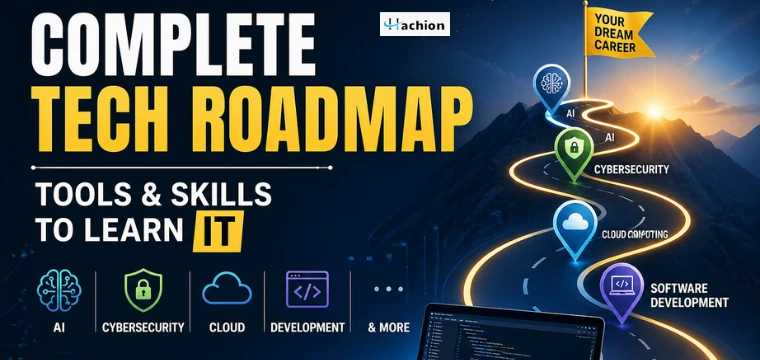
Complete Tech Roadmap: Tools & Skills to Learn IT
In today’s fast-changing digital world, having a clear, complete tech roadmap is essential for anyone who wants to build a successful career in IT. With new technologies emerging almost every day, many beginners feel confused about where to start and what to learn first.
This complete tech roadmap is designed to simplify your journey. It gives you a clear direction, helping you understand the skills you need and the tools you should learn across key areas like artificial intelligence, cybersecurity, cloud computing, and software development. Whether you are just starting or planning to switch careers, this guide will help you move forward with confidence.
Why You Need a Complete Tech Roadmap
A well-defined roadmap serves as a guide, keeping you focused and organized throughout your learning journey.
Here’s why it matters:
- It removes confusion and gives you a clear starting point
- Helps you focus on high-demand skills
- Saves time by avoiding unnecessary topics
- Builds a strong and structured learning path
- Improves your chances of getting job-ready faster
Without a roadmap, many learners jump from one technology to another without mastering any, which slows down their progress.
Step 1: Build Strong Foundations
Every successful tech career starts with strong fundamentals. Before exploring advanced topics, you need to understand the basics clearly.
Essential Skills:
- Basic computer knowledge
- Understanding of operating systems like Windows and Linux
- Networking basics such as IP, DNS, and protocols
- Introduction to programming (Python or JavaScript is recommended)
Recommended Tools:
- Visual Studio Code for coding
- Git and GitHub for version control
- Linux terminal for command-line practice
These basics form the core of your complete tech roadmap and will support you in every advanced field you choose later.
Step 2: Choose Your Core Domain
Once you have a solid foundation, the next step in your complete tech roadmap is selecting a specialization. Choosing the right domain depends on your interests and career goals.
AI and Machine Learning
Artificial Intelligence is one of the fastest-growing fields in technology. It helps enable automation, supports data analysis, and drives smart system development.
Skills to Learn:
- Python programming
- Data analysis and visualization
- Machine learning concepts
- Basics of deep learning
Tools:
- TensorFlow
- Scikit-learn
- Jupyter Notebook
AI is a great choice if you enjoy working with data and building intelligent systems.
Cybersecurity
As digital threats continue to rise, cybersecurity has become a critical field in IT. Organizations need professionals who can protect their systems and data.
Skills to Learn:
- Network security fundamentals
- Ethical hacking techniques
- Risk analysis and management
- Security policies and protocols
Tools:
- Wireshark
- Metasploit
- Burp Suite
Cybersecurity is ideal for those who are interested in solving problems and defending systems against attacks.
Cloud Computing
Cloud computing powers most modern applications and services. It allows businesses to store data and run applications over the internet.
Skills to Learn:
- Cloud architecture basics
- Virtual machines and storage
- Deployment models
- Introduction to DevOps
Tools:
- AWS
- Microsoft Azure
- Google Cloud Platform
Cloud skills are highly valued and offer excellent career opportunities.
Software Development
Software development is the backbone of the tech industry. It involves building applications, websites, and systems.
Skills to Learn:
- Programming languages like Java, Python, or JavaScript
- Data structures and algorithms
- Frontend and backend development
- Working with APIs and databases
Tools:
- React or Angular for frontend
- Node.js for backend
- Docker for containerization
This field is perfect for those who enjoy creating and building digital solutions.
Step 3: Learn DevOps and Automation
DevOps is an important part of modern IT workflows. It focuses on improving collaboration between development and operations teams.
Skills:
- Continuous Integration and Continuous Deployment (CI/CD)
- Automation scripting
- Containerization and orchestration
Tools:
- Jenkins
- Docker
- Kubernetes
Adding DevOps skills to your complete tech roadmap will make you more valuable in the job market.
Step 4: Work on Real Projects
Learning theory alone is not enough. Practical experience is what truly makes you job-ready.
Project Ideas:
- Build a personal portfolio website
- Create a cloud-based application
- Perform a basic security testing project
- Develop a simple AI-based model
Benefits of Projects:
- Improve your practical skills
- Help you build a strong portfolio
- Increase your confidence
- Make your resume stand out
Employers often prefer candidates who can demonstrate real-world experience.
Step 5: Get Certified and Keep Learning
Certifications help validate your skills and show employers that you are serious about your career.
Popular Certification Areas:
- Cloud certifications (AWS, Azure)
- Cybersecurity certifications
- AI and data science certifications
Technology is always evolving, so continuous learning is essential to stay relevant in your field.
Build Your Career with the Right Training
Following a roadmap on your own can sometimes feel challenging. That’s why structured learning can make a big difference.
Platforms like Hachion online trainings offer practical, industry-focused courses that help you gain real skills. With expert guidance, hands-on projects, and career support, you can follow your complete tech roadmap more effectively and achieve your goals faster.
Conclusion
A clear, complete tech roadmap is the key to building a successful career in IT. By starting with the basics, choosing the right domain, learning essential tools, and gaining practical experience, you can create a strong foundation for your future.
Stay consistent, keep improving your skills, and adapt to new technologies as they emerge. Success in tech doesn’t happen overnight, but with the right roadmap and dedication, you can achieve your career goals.
FAQs (Frequently Asked Questions)
1. What is the best tech field to start a career?
A: The best field depends on your interest. AI, cybersecurity, cloud computing, and software development are all in high demand.
2. How long does it take to become job-ready in IT?
A: It usually takes between 6 months and 2 years, depending on your learning pace and consistency.
3. Can I start a tech career without a degree?
A: Yes, many professionals build successful careers through skills, certifications, and project experience.
4. Which programming language is best for beginners?
A: Python is often recommended for its ease of learning and widespread use.
5. Are certifications necessary in IT?
A: Certifications are not mandatory, but they help validate your skills and improve job opportunities.
6. How important are real-world projects?
A: Projects are extremely important as they demonstrate your practical knowledge and problem-solving abilities.


