
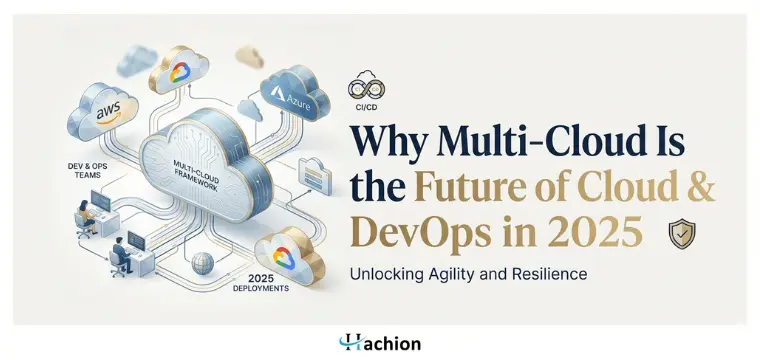
Why Multi-Cloud Is the Future of Cloud & DevOps in 2025
The pace of change in IT has never been faster, and cloud computing continues to be at the center of this revolution. Over the last ten years, businesses have gradually shifted from on-premises data centers to the cloud, gaining scalability, cost advantages, and greater flexibility. But as we move through 2025, a new trend has taken over—multi-cloud strategies are becoming the default choice.
Rather than relying on a single provider, enterprises are now spreading workloads across Amazon Web Services (AWS), Microsoft Azure, and Google Cloud Platform (GCP). This is more than just a technical shift—it’s transforming career paths, reshaping job responsibilities, and redefining the skills IT professionals need to stay relevant.
Let’s dive into why multi-cloud adoption is accelerating, how it’s influencing Cloud & DevOps careers, and why mastering multiple platforms is no longer optional—it’s essential.
Multi-Cloud in the Spotlight for 2025
In earlier years, many organizations stuck with one provider for simplicity, unified billing, and support. But this created limitations:
- Vendor Lock-In: Dependence on a single platform often restricts flexibility and forces compliance with that provider’s pricing and policies.
- Downtime Risks: Outages on one provider could cripple operations, while distributing workloads across clouds improves resilience and disaster recovery.
- Best-of-Breed Services: Each provider has strengths—AWS for scalability, Azure for enterprise integration, and GCP for AI and analytics.
- Regulatory Demands: Data localization rules push businesses toward using multiple providers across regions.
By 2025, industry analysts expect that three out of four enterprises will adopt a multi-cloud approach, evolving from a “cloud-first” mindset to a smarter, more strategic “cloud-smart” model.
How AWS, Azure, and Google Cloud Are Shaping the Future of the Multi-Cloud Market
Each of the big three providers plays a unique role in shaping the multi-cloud ecosystem:
- Amazon Web Services (AWS): Still the global leader, AWS is recognized for its extensive infrastructure, wide service portfolio, and unmatched enterprise scalability.
- Microsoft Azure: Azure’s main advantage is its seamless integration with Microsoft tools and services, such as Office 365, Active Directory, and enterprise software solutions. Its hybrid cloud solutions make it the go-to choice for traditional enterprises.
- Google Cloud Platform (GCP): GCP is viewed as the innovation hub, particularly in artificial intelligence, machine learning, and advanced analytics, with tools like BigQuery.
Together, these platforms are creating a job market where multi-cloud fluency is in higher demand than single-provider expertise.
How Multi-Cloud Is Transforming Careers
The IT workforce is undergoing a significant shift. As businesses embrace multi-cloud strategies, professional roles are evolving in four major directions:
a) Cloud Architects & Engineers
Earlier, specialists often focused only on AWS or Azure. Today, organizations want architects who can design hybrid and multi-cloud frameworks, manage workload migration, and optimize costs across platforms.
b) DevOps Engineers
Automation and CI/CD pipelines are at the heart of DevOps. In a multi-cloud world, engineers need to integrate Kubernetes, Terraform, Jenkins, and GitOps across AWS, Azure, and GCP. Knowledge of cloud-native services from multiple platforms has become a baseline requirement.
c) Security & Compliance Experts
More providers mean more complexity in data security and governance. Professionals skilled in identity and access management (IAM), encryption, and compliance monitoring across clouds are critical for modern enterprises.
d) Data & AI Specialists
With GCP’s AI leadership, Azure’s BI integration, and AWS’s SageMaker, data engineers and machine learning experts are now expected to work across providers to unlock real business value.
Simply put, multi-cloud adoption has created demand for versatile professionals who can connect the dots across providers.
Must-Have Skills for 2025
To thrive in the multi-cloud era, IT professionals need a diverse skillset that blends technical expertise with strategic thinking:
- Core Cloud Platforms: AWS, Azure, and GCP—deployment, management, migration, and pricing strategies.
- DevOps & Automation: Docker, Kubernetes, Terraform, Ansible, Jenkins, and GitOps.
- Security & Compliance: IAM, governance frameworks, encryption, and monitoring tools.
- Hybrid & Multi-Cloud Tools: Google Anthos, Azure Arc, AWS Outposts.
- Cost Optimization: Skills in distributing workloads strategically for efficiency and ROI.
- Soft Skills: Problem-solving, adaptability, and strong communication to collaborate in multi-cloud environments.
These aren’t “bonus” skills anymore—they’re now mandatory for career growth.
Career Opportunities in the Multi-Cloud Era
Multi-cloud expertise is quickly becoming one of the most valuable assets in the IT job market.. Top roles in 2025 include:
- Multi-Cloud Architect
- DevOps Engineer (with multi-cloud CI/CD expertise)
- Cloud Security Analyst
- Data Engineer / Machine Learning Engineer
- Cloud Migration Specialist
- Site Reliability Engineer (SRE)
Industry surveys show that multi-cloud specialists earn 20–30% more than their single-cloud counterparts. Organizations highly value professionals who can minimize risks, enhance security, and optimize operational efficiency, often offering higher compensation for such expertise.
Challenges in Multi-Cloud Adoption
Despite the benefits, enterprises face challenges:
- Talent Gap: Not enough experts are proficient across multiple platforms.
- Complexity: Managing different environments requires stronger governance.
- Integration: Ensuring seamless communication between services can be difficult.
- Security Risks: A wider attack surface increases vulnerabilities.
These hurdles highlight why skilled professionals are in such high demand—organizations need experts to address these exact pain points.
Why 2025 Is the Right Time to Upskill
As we move through 2025, one truth is clear: multi-cloud is no longer optional—it’s the new normal.
- Enterprises are actively hiring professionals with certifications across AWS, Azure, and GCP.
- The talent gap means opportunities far outweigh supply.
- Multi-cloud certifications not only boost credibility but also lead to higher pay packages.
For IT professionals, the best time to upskill is now. By investing in certifications and cross-platform expertise today, you can future-proof your career in one of the fastest-growing domains in tech.
Final Thoughts
The real question has shifted from ‘Will multi-cloud shape the future?’ to ‘How can businesses thrive in it?’—the answer is a resounding yes. What matters now is whether IT professionals are ready to seize the opportunity.
AWS, Azure, and Google Cloud are redefining how businesses operate, and as organizations embrace multi-cloud, the job market is evolving with it. Professionals who adapt to this shift will enjoy greater career opportunities, higher salaries, and long-term growth.
If you want to future-proof your career, now is the time to master Cloud & DevOps with a multi-cloud perspective.
🚀 Take the Next Step with Hachion
At Hachion, we understand the skills enterprises demand in today’s IT world. Our Cloud & DevOps courses are designed to equip you with hands-on expertise in AWS, Azure, and Google Cloud.
By enrolling, you’ll gain:
- Real-world project experience
- Expert-led training on cloud and DevOps tools
- Industry-recognized certifications preparation
- Career guidance and placement support
👉 Don’t just follow the future—lead it. Enroll with Hachion today and become a cloud professional ready for 2025 and beyond!


