
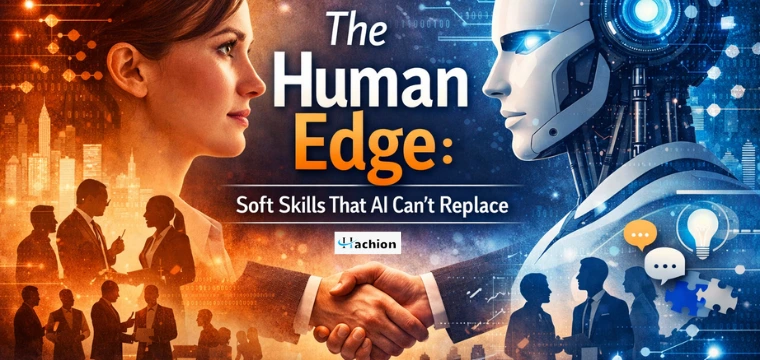
The Human Edge: Soft Skills That AI Can’t Replace
The workplace is changing faster than ever. With artificial intelligence reshaping how we work, many technical tasks are becoming automated. Yet, despite all this progress, one thing remains clear: machines still cannot replace human connection.
That’s why soft skills are becoming the true differentiator. They influence the way we interact, work together, and find solutions. No matter your profession, these skills are what turn knowledge into real impact.
Today, professionals are beginning to understand that success is no longer just about technical expertise. It’s about how effectively you work with others, adapt to change, and make thoughtful decisions in complex situations.
Why Soft Skills Matter More Than Ever
Modern technology can process information at incredible speed. AI can write, calculate, and analyze, but it cannot truly understand people.
Workplaces today are more dynamic and interconnected. Teams are global, communication is digital, and change is constant. In this environment, soft skills are what keep everything running smoothly.
Organizations are actively looking for individuals who can:
- Express ideas clearly
- Adjust to new challenges
- Work well in diverse teams
- Lead with understanding and empathy
These abilities are not just “nice to have”, they are essential for innovation, teamwork, and long-term success.
The Human Edge: Soft Skills AI Can’t Replace
Let’s take a closer look at the key soft skills that continue to set humans apart:
1. Emotional Intelligence: Emotional intelligence is the ability to recognize, understand, and manage emotions, both your own and those of others.
In a professional setting, this means:
- Building stronger relationships
- Handling conflicts calmly
- Leading with awareness
While AI can detect patterns, it cannot genuinely feel or respond with human sensitivity.
2. Communication Skills: Good communication goes beyond speaking; it’s about clarity, tone, and understanding your audience.
Whether you're:
- Writing an email
- Presenting an idea
- Collaborating with a team
Your ability to communicate effectively determines how well your ideas are received and implemented.
3. Adaptability: Change is no longer occasional; it’s constant. New tools, technologies, and expectations are always emerging. Professionals who thrive are those who remain flexible, open-minded, and willing to learn.
Adaptability ensures that you stay relevant, no matter how the industry evolves.
4. Critical Thinking and Problem-Solving: AI can suggest answers, but it cannot replace human judgment.
Critical thinking allows you to:
- Evaluate information carefully
- Question assumptions
- Make balanced decisions
It’s what helps you navigate uncertainty and solve problems that don’t have straightforward answers.
5. Collaboration and Teamwork: Success today is rarely achieved alone.
Working effectively with others means:
- Listening to different perspectives
- Sharing ideas openly
- Supporting team goals
Strong collaboration builds trust and creates better outcomes, something technology alone cannot achieve.
6. Self-Management: With flexible and remote work becoming more common, managing yourself has become just as important as managing tasks.
This includes:
- Staying organized
- Managing time effectively
- Taking responsibility for your work
Professionals who are self-driven and reliable are highly valued in any organization.
The Rise of Human and AI Collaboration
Rather than replacing humans, AI is becoming a powerful tool that supports our work.
This shift introduces a new kind of skill, knowing how to work with technology.
It involves:
- Using AI tools efficiently
- Reviewing and refining AI-generated outputs
- Making ethical and responsible decisions
The real advantage lies in combining human judgment with technological capability.
Real-World Applications of Soft Skills
Soft skills are not limited to any one role, they are valuable in every profession.
- In IT, they help translate complex ideas into simple explanations
- In management, they enable better leadership and team engagement
- In marketing, they drive creativity and connection with audiences
- In freelancing, they help build trust and long-term client relationships
No matter your career path, these skills enhance your effectiveness and impact.
How to Develop Soft Skills
Improving soft skills doesn’t happen overnight; it’s a continuous process.
You can start by:
- Listening actively during conversations
- Asking for and applying feedback
- Participating in team activities
- Taking initiative in group settings
- Balancing technology use with human judgment
Small, consistent efforts can lead to significant growth over time.
Build Your Career with the Right Training
While experience plays a big role, structured learning can accelerate your development.
Hachion Online Training provides programs designed to help you strengthen both technical knowledge and essential soft skills.
Through the right training, you can:
- Improve communication and leadership abilities
- Gain practical, real-world experience
- Prepare yourself for long-term career growth
Investing in learning today can open doors to better opportunities tomorrow.
Conclusion
As technology continues to advance, the value of human skills becomes even more apparent.
Soft skills are not secondary; they are fundamental. They influence how you work, how you grow, and how you connect with others.
The professionals who stand out are those who combine knowledge with strong interpersonal abilities.
In the end, technology may shape the future, but it’s human skills that will define it.
Frequently Asked Questions(FAQs)
1. What are the most important soft skills?
A: Key soft skills include communication, emotional intelligence, adaptability, critical thinking, and teamwork.
2. Why do soft skills matter so much today?
A: Because they enable effective collaboration, decision-making, and leadership, areas where technology cannot fully replace humans.
3. Can technology replace soft skills?
A: No. While technology can support tasks, it cannot replicate human understanding, empathy, or judgment.
4. How can I start improving my soft skills?
A: Begin with small steps like active listening, seeking feedback, and practicing communication in daily interactions.
5. Do employers really value soft skills?
A: Yes. Many employers consider them essential for long-term success and career growth.
6. Are soft skills useful in every profession?
A: Absolutely. Regardless of your field, they enhance how you work and interact with others.


