
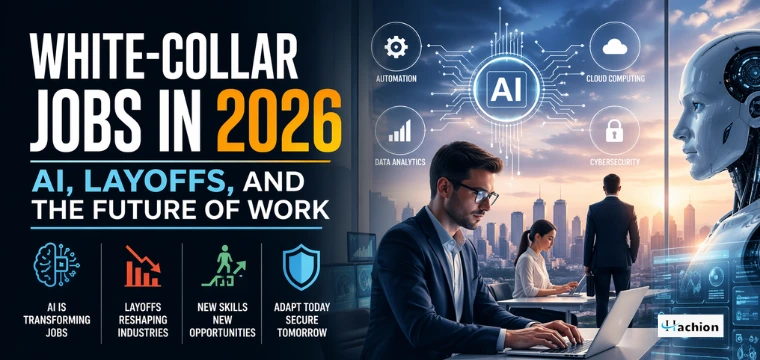
White-Collar Jobs: AI, Layoffs, and the Future of Work
White-collar jobs are undergoing a major transformation. Not long ago, these roles were considered the safest career paths, offering stability, good salaries, and long-term growth. From software developers to business analysts and corporate managers, white-collar professionals enjoyed a sense of security that is now slowly fading.
Today, the conversation around White-Collar Jobs is changing rapidly. The rise of artificial intelligence, combined with increasing layoffs across the tech industry, has created uncertainty among professionals. Many are now questioning whether these jobs are still reliable or being reshaped into something entirely new.
What Are White-Collar Jobs?
White-collar jobs are typically professional roles that involve mental effort rather than physical labor. These jobs are usually performed in office environments or remotely using digital tools.
Common examples include:
- Software engineers
- Data analysts
- Financial consultants
- Marketing professionals
- Project managers
Traditionally, these careers required formal education and specialized training. They were often associated with long-term job security and career growth. However, in today’s fast-changing world, even these roles are facing new challenges.
Why White-Collar Jobs Are Evolving
1. The Impact of Artificial Intelligence
Artificial intelligence is no longer just a concept; it is actively being used across industries. Many tasks that once required human input are now automated. For example:
- Writing reports and emails
- Performing data analysis
- Creating basic software code
- Managing customer interactions
This shift doesn’t mean jobs are completely disappearing. Instead, routine and repetitive tasks are being handled by machines, allowing humans to focus on more complex and creative responsibilities.
2. The Reality of Tech Layoffs
Over the past year, layoffs in the tech sector have become more common. Large organizations are restructuring their teams to adapt to new technologies and economic pressures.
The main reasons include:
- Cost reduction strategies
- Increased investment in AI and automation
- Changing business priorities
As a result, many white-collar professionals are experiencing job uncertainty for the first time in years.
3. The Rise of Skill-Based Hiring
Another major shift is how companies hire talent. Employers are moving away from traditional hiring methods that focus only on degrees. Instead, they are looking for:
- Practical knowledge
- Real-world experience
- Problem-solving abilities
This means that continuously learning new skills is now essential for career growth.
Are White-Collar Jobs Really at Risk?
The idea that white-collar jobs are disappearing is not entirely accurate. The situation is more about transformation than elimination.
More Vulnerable Roles
- Administrative and repetitive tasks
- Data entry positions
- Basic support roles
- Roles That Are Growing
- AI and machine learning specialists
- Cloud computing professionals
- Cybersecurity experts
- Data scientists
The key takeaway is simple: jobs are changing, not vanishing. Professionals who adapt will continue to find opportunities.
AI: A Challenge or an Opportunity?
Artificial intelligence often creates fear, especially when people hear about automation replacing jobs. However, it also brings significant advantages.
Challenges
- Reduction in repetitive job roles
- Increased competition in certain fields
- Opportunities
- Creation of new career paths
- Improved efficiency and productivity
- Demand for advanced technical expertise
Those who understand how to use AI effectively will have a clear advantage in the job market.
Skills Required for White-Collar Jobs
To stay competitive, professionals must focus on building both technical and non-technical skills.
- Technical Skills
- Artificial Intelligence and Machine Learning
- Cloud Computing
- Cybersecurity fundamentals
- Data analysis and visualization
- Soft Skills
- Critical thinking
- Communication
- Creativity
- Adaptability
- Continuous Learning
Perhaps the most important factor is the ability to keep learning. Technology evolves quickly, and staying updated is the only way to remain relevant.
How to Future-Proof Your Career
If you want to succeed in the evolving job market, here are some practical steps:
- Keep yourself updated with industry trends
- Learn new technologies regularly
- Work on real-world projects to gain experience
- Build a professional network
- Focus on both technical and soft skills
Enrolling in structured programs like Hachion Online Training can also be a smart move. Such platforms provide hands-on learning, helping you develop the skills needed for modern IT careers and improving your chances of long-term success.
Conclusion
White-Collar Jobs are not disappearing, but they are changing faster than ever before. The rise of AI and automation has created uncertainty, but it has also opened new doors for those willing to adapt.
Instead of seeing these changes as a threat, professionals should view them as an opportunity to grow. The future belongs to those who are flexible, willing to learn, and ready to embrace new technologies.
In a world where change is constant, staying relevant is the real key to success.
Frequently Asked Questions(FAQs)
1. Are white-collar jobs still secure in 2026?
A: They are less predictable than before, but still valuable. The key is to keep upgrading your skills.
2. Which white-collar roles are most at risk?
A: Jobs involving repetitive and routine tasks are more likely to be automated.
3. What skills are most important today?
A: AI, cloud computing, cybersecurity, data analysis, and communication skills are highly important.
4. Is AI completely replacing jobs?
A: No, AI is replacing specific tasks, not entire professions. It is also creating new job roles.
5. How can I stay competitive in the job market?
A: By continuously learning, gaining practical experience, and adapting to new technologies.
6. Are layoffs a long-term trend?
A: Layoffs are part of industry changes. While some jobs are lost, new opportunities are also being created.
7. Where can I learn job-ready tech skills?
A: You can enroll in Hachion Online Training to gain practical knowledge and build a strong career in IT.


