
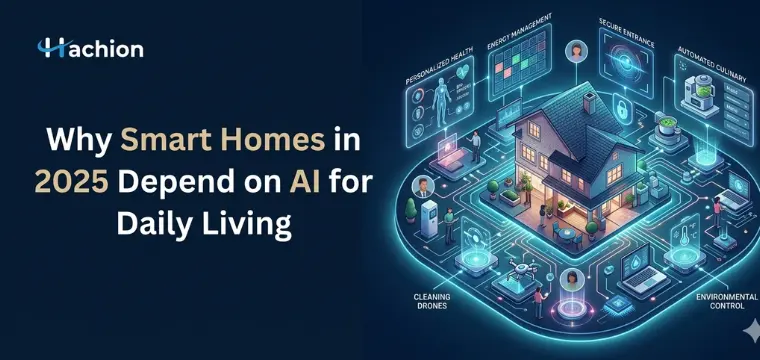
Smart Homes in 2025: How AI Technology Is Powering Daily Household Life
Artificial Intelligence (AI) has moved far beyond offices, factories, or research labs—it has stepped right into our homes. By 2025, AI-driven smart homes will have moved from being a concept of the future to a common reality. They’re becoming everyday realities, making households more intelligent, energy-efficient, secure, and personalized.
From voice-activated assistants that understand your habits to fridges that help you plan meals, AI is quietly transforming the way we live. But how exactly are these smart homes shaping our daily routines? Let’s explore through the lens of what, when, where, why, how, and who—with real-world examples along the way.
What Exactly Are Smart Homes in 2025?
A smart home isn’t simply about owning gadgets—it’s about a living environment that adapts to your lifestyle. In 2025, AI-powered homes are seamlessly connected through the Internet of Things (IoT), voice recognition, and predictive automation.
Real-world examples:
- Your coffee maker begins brewing right after your morning alarm.
- Lights dim and curtains close automatically when it’s movie time.
An AI assistant reminds you about your doctor’s appointment while adjusting your commute based on traffic.
In short, smart homes in 2025 function like an invisible personal assistant, quietly making life smoother.
When Did Smart Homes Become a Reality?
Smart home devices have been around for over a decade, but true AI integration is what’s setting 2025 apart.
Earlier (2018): Homeowners needed to program routines manually, such as “switch on the lights at 7 PM.”
Now (2025): The system has learned your lifestyle. If it notices you usually relax in the living room around 7, lights and air conditioning adjust automatically—no commands needed.
This shift marks a move from basic automation to anticipatory intelligence.
Everyday Applications of AI in Smart Homes
AI has found a role in almost every corner of modern homes. Let’s take a tour:
- Kitchen: Smart refrigerators such as Samsung’s AI-powered Family Hub suggest meals based on available ingredients and even order groceries before you run out.
- Living Room: Smart TVs such as LG ThinQ now suggest shows and movies based on both your viewing habits and even your current mood.
- Bedroom: Smart mattresses (like Eight Sleep) monitor your sleep cycle and regulate temperature for deep rest.
- Bathroom: AI-enabled mirrors analyze skin conditions and suggest personalized routines.
- Garage: Tesla’s AI home integration optimizes EV charging during off-peak hours to reduce electricity bills.
With AI present in nearly every room, the modern house feels more like a connected ecosystem than a set of isolated devices.
Why Are Smart Homes Important in 2025?
AI-driven homes aren’t just about luxury—they solve real-world problems:
- Energy Efficiency: Smart thermostats such as Google Nest help households cut power bills by learning heating/cooling habits and reducing waste
- Enhanced Security: AI-powered cameras like Ring and Arlo use facial recognition to differentiate between strangers, neighbors, and family members.
- Health & Well-being: Air purifiers track pollution in real time, while kitchen devices encourage healthier eating.
In a world where time, safety, and energy are precious, smart homes deliver both comfort and sustainability.
How Do Smart Homes Actually Work?
Smart homes function through the integration of three forces:
- AI → Learns behavior patterns like when you sleep or cook.
- IoT (Internet of Things) Integration→ Through the Internet of Things, devices ranging from lights and kitchen appliances to security sensors are seamlessly linked, allowing your home to function as one connected system.
- Data Analytics → Interprets patterns to predict what you’ll need before you ask.
Example: If your routine shows you usually start dinner at 7:30 PM, your oven could preheat at 7:20, your playlist might start, and the kitchen lights brighten automatically.
This isn’t automation—it’s predictive intelligence in action.
Who Benefits From Smart Homes?
The advantages extend to everyone:
- Families: Parents gain peace of mind with AI-enabled cameras and real-time alerts.
Elderly Residents: AI assistants provide medication reminders and detect emergencies, connecting directly with doctors if needed.
- Remote Workers: AI-driven office setups reduce noise, adjust lighting, and schedule meetings.
In essence, smart homes make life easier for all age groups and professions.
Real-World Examples of Smart Homes in Action (2025)
These innovations are already making homes smarter:
- Amazon Astro: A household robot designed to move around the home, monitor rooms for security, respond to voice queries, and integrate seamlessly with Alexa.
- LG InstaView Smart Fridge: Recognizes missing items and orders groceries for you.
- Roomba j7+: Avoids obstacles and learns cleaning schedules for greater efficiency.
- Philips Hue Lights: Change brightness and color depending on natural sunlight, mood, or even the scene of your Netflix show.
What once seemed futuristic is now becoming mainstream.
Challenges of AI in Smart Homes
Despite its benefits, smart living comes with hurdles:
- Privacy & Security: Always-on microphones and cameras raise concerns about data protection.
- Cost Barriers: Full-scale AI-powered homes can be expensive to set up.
- Complexity: Non-tech-savvy users may find too many smart devices overwhelming.
The good news, Companies are working on cheaper, more secure, and user-friendly solutions to make smart homes accessible to everyone.
What’s Next Beyond 2025? The Future of Smart Homes
- Future Outlook: The role of AI in our homes is only set to expand, with innovations making daily living smarter, safer, and more personalized than ever before.
- Emotion AI: Adding to this, Emotion AI enables homes to adapt in real time—tuning lighting, music, or even room temperature according to the resident’s mood.
- Self-Healing Systems: Devices that detect and fix technical problems on their own.
- Hyper-Connected Living: Integration of homes with workplaces and smart cities, creating a seamless lifestyle ecosystem.
By 2030, smart homes will likely blur into smart living, where the environment adapts fully to human needs.
Why Learning AI Now Matters (With Hachion)
AI is not just shaping the future of technology—it’s shaping the future of our everyday lives. The demand for AI specialists is rapidly growing, especially in industries like home automation, healthcare, finance, and education.
This is why learning AI today is critical.
Hachion provides cutting-edge training in AI and Generative AI, combining hands-on projects, real-world use cases, and expert-led mentorship. If you’re inspired by the rise of smart homes and want to create the next wave of innovations, Hachion gives you the skills to do so.
Enroll today with Hachion and step confidently into the AI-powered future.
Conclusion
By 2025, smart homes will no longer be luxury concepts but practical realities that enhance comfort, reduce waste, and ensure safety. From intelligent kitchens to AI-driven security, the technology is quietly turning houses into living ecosystems designed to adapt to us.
The next few years will only deepen this transformation. And if you want to be part of this change—not just as a user but as a creator—now is the time to upskill with Hachion.
✨ Smart homes are the future. With Hachion, you can help build them.


